
Read less.
Know more.
Drop in an article, a paper, a PDF or a video. Aginsi reads it for you — the key points highlighted, the citations kept, the rest cut away — and hands you a clear summary in seconds. For the researcher who has forty tabs open and four hours to read them.
Pick a source. Watch Aginsi distil it.
Choose something to read and let Aginsi do the reading — the key points highlighted, condensed into a summary you can act on. A preview of how it reads.
The attention economy describes a marketplace in which human attention is the scarce commodity. Platforms compete to capture our focus and to maximise the time we spend engaging with their content. Their algorithms learn from our behaviour, adapting continually to our preferences and our vulnerabilities — shaping not only what we see, but how we think and feel. Addressing this requires a mix of personal awareness, mindful design and informed regulation.
- Attention is the scarce resource platforms compete to capture.
- Algorithms adapt to our behaviour to maximise time spent.
- The effects reach mental health, relationships and public discourse.
- Awareness, mindful design and regulation are the path forward.
This study examined the relationship between sleep and memory consolidation across 124 participants over six weeks. Subjects who obtained at least seven hours of sleep showed a 41% improvement in recall of newly learned material compared with a sleep-restricted control group. The effect was strongest for declarative memory and was mediated by time spent in slow-wave sleep. The authors conclude that sleep is not a passive state but an active phase of memory processing.
- Studied sleep and memory across 124 participants over six weeks.
- Seven-plus hours of sleep improved recall by 41% vs. the control.
- The effect was strongest for declarative memory.
- Slow-wave sleep mediated the benefit — sleep is active processing.
The 2026 industry report finds that adoption of AI tooling among mid-market firms rose from 23% to 61% year over year, driven primarily by productivity gains in knowledge work. Respondents cited research and document review as the highest-value use cases, while data privacy and accuracy remained the leading barriers to deeper adoption. Firms that piloted before scaling reported the strongest returns and the fewest reversals.
- AI adoption among mid-market firms rose from 23% to 61% YoY.
- Research and document review were the highest-value use cases.
- Privacy and accuracy remained the leading barriers.
- Firms that piloted before scaling saw the strongest returns.
In this lecture, the speaker argues that expertise is less about raw talent than about the structure of deliberate practice. Drawing on studies of musicians and chess players, they show that it is focused, feedback-rich repetition at the edge of one’s ability — not hours alone — that drives mastery. The talk closes with practical guidance: define a specific skill, seek immediate feedback, and rest to consolidate.
- Expertise comes from deliberate practice, not raw talent.
- Focused, feedback-rich repetition at the edge of ability drives mastery.
- Hours alone don’t help — structure and feedback do.
- Define a skill, seek immediate feedback, and rest to consolidate.
The reading, done — so the thinking is yours.
Not a search box and not a chatbot. A reader that takes whatever you have to get through and hands back the parts that matter, with the sources intact.
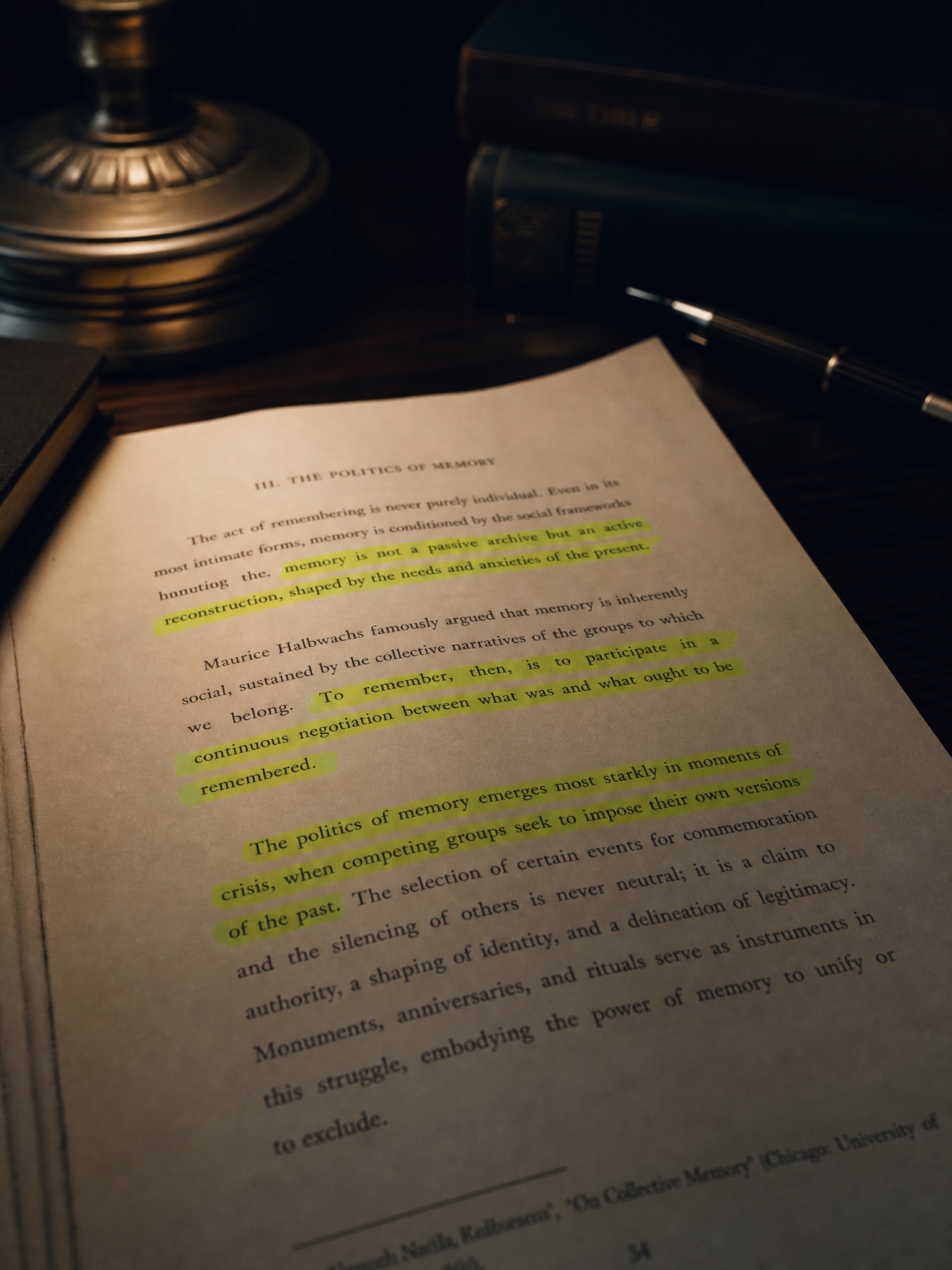
Read anything
Articles, academic papers, PDFs, long threads, even video transcripts — Aginsi reads the whole thing the way you wish you had time to.
Key points, highlighted
It surfaces the sentences that carry the meaning and cuts the padding, so the structure of an argument is visible at a glance.
One clear summary
A long source becomes a short, ordered summary you can read in under a minute — and trust, because the reasoning is shown.

Citations kept
Sources and references stay attached, so you can quote and cite with confidence instead of paraphrasing into a fog.
Compression you can see
Every summary shows how far it shrank the source and how much reading time it gave you back. The savings are on the page.
Private by design
Aginsi distils what you give it and keeps only what you choose to save. It doesn’t store your documents or train on them.
The source on one side, the gist on the other.
Aginsi lays the long text beside its own distillation: the passages that matter highlighted in place, and a short ordered summary you can read at a glance. No more skimming a paper three times hoping to catch the point — it reads all of it once and shows you the four lines that count.
Features →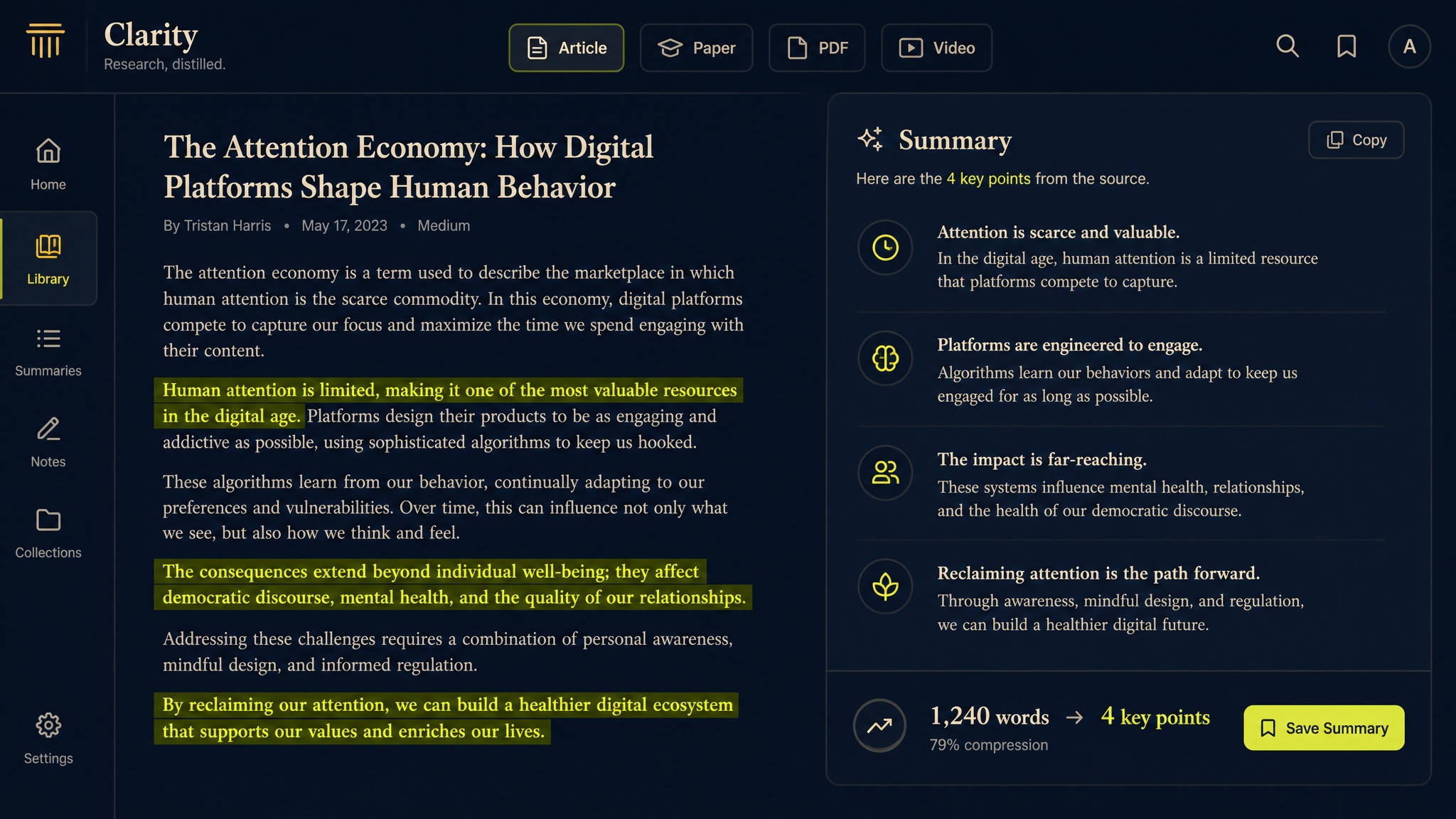
Three steps from a stack to a summary.
Bring the source
Paste a link, drop a PDF, or hand it a video. Aginsi takes articles, papers, reports and transcripts — and it’s never stored beyond the session.
Let it read
In seconds it highlights the key passages, keeps the citations, and writes a short, ordered summary you can actually trust.
Read what matters
Skim the four lines, follow the highlights into the source when you need the detail, and move on — with the hours you’d have spent reading still in your day.
Priced for a paper or a whole reading list.
Distil your first sources free. Move up when the reading list does. Every tier keeps your sources private.
Margin
For the occasional read
- 10 summaries / month
- Articles & PDFs
- Key-point highlights
- Citations kept
Scholar
For students & researchers
- Unlimited summaries
- Papers & video transcripts
- Library, tags & search
- Export to Markdown & PDF
- Browser companion
Faculty
For teams & departments
- Everything in Scholar
- Team seats & shared shelves
- Batch & API access
- Priority support
All tiers: no setup fee, cancel anytime, and your source documents are never stored.
Marginalia.
How is this different from a chatbot?
A chatbot waits for your prompt; Aginsi reads a whole source the moment you hand it over and returns a structured summary with the key passages highlighted and the citations kept. It is built for reading, not chatting — so you skim four lines instead of typing five questions.
What can it read?
Articles and blog posts, academic papers, PDFs and reports, long threads, and the transcripts of videos and talks. If it is text or speech, Aginsi will read it and distil it.
Will the summary lose what matters?
Aginsi highlights the sentences that carry the meaning rather than rewriting them into a fog, and it keeps the citations so you can check the source. It is a faithful first read — and you can always follow a highlight back into the original.
Do you store my documents?
No. Aginsi distils what you give it during the session and keeps only the summaries you choose to save — never the source document, and it does not train on your content.
How much time does it actually save?
Summaries average around 90% shorter than the source, and each one shows you exactly how much reading time it gave back. For a reading list that used to take an evening, that is most of the evening.
Your reading list isn’t getting shorter. You can.
Distil your first sources free — no card, no setup, and nothing of yours is stored.
Start reading less